Category Archives: Uncategorized

Blog 69

Trying to get back in the saddle…I don’t intend to do these blogs regularly—only when there I find information that might be of interest to classmates both in and out of town. I did renew the domain for another year, so the website is available for the next twelve months.  Further note is that this publishing process changes the formatting, and I cannot figure out some of the strange things that sometime occur, especially with the photos.  Not my fault.

April Lunch.
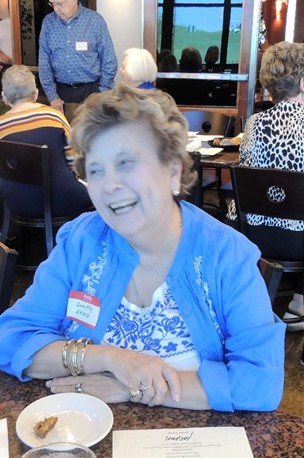
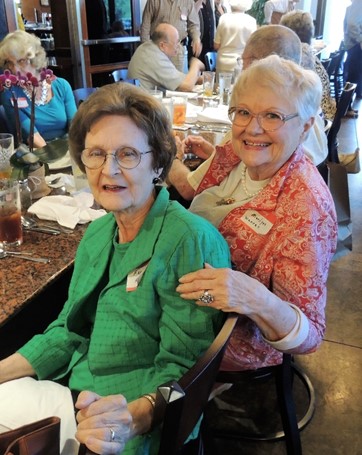
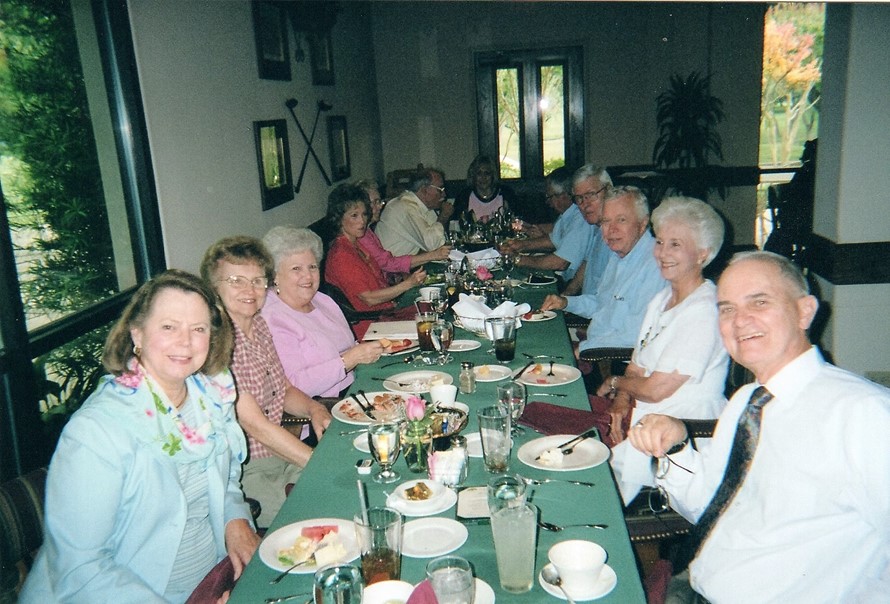
Thanks to all 60 or so who attended. Once again, Betty Stensland Saunders drove over from Louisiana, and Connie Mayes Dyer and Ed Davis made the Houston same day roundtrip (not together.) Pete and Carolyn Sweet came down from Georgetown. Bob and Phyllis Tate from Austin and Patsy Hatch and Tom Patterson were over from Houston. Both stayed overnight for the Jeff Open House on Saturday. Although I had my camera along, I took almost zero photos. Fortunately, Patsy had her camera. I will be posting her photos in the next several blog efforts.

Does anyone remember the old advertising campaign from the 50’s or 60’s, which included a photo of a gorgeous lady and the question beneath the photo: “Does she or doesn’t she? Only her hairdresser knows for sure!”

In looking at Patsy’s photos, there is little left to doubt. She does! Or she doesn’t! No question about it. I had a good chuckle, and I do hope none of those who do are offended.

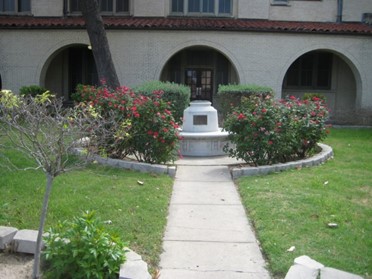
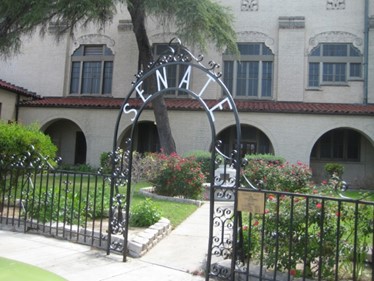
I did take a couple of shots of the Senate Patio, which is on the west side of the auditorium. I always thought it was a bit non-descript, but it looked great, as you can see below.

  
Good news!
Local elections were last week, with a significant bond issue passed for the San Antonio Independent School District, which includes Jefferson. Those who were at the lunch last October will recall that our speaker indicated that approximately 76-78 million will be allocated to refurbishing Jeff. That is a sizable amount, for sure, though to replace the school today would cost in the hundreds of millions. I don’t know how all will be spent, but a good portion of it will go to foundation work under the gym and the cafeteria. I believe they will also powerwash the grime away that has collected in the past eighty-five years since the school was completed.

Recent Passings.
Several classmates have sent along information about deaths of four more classmates, some very recent, some older. It is sad news to receive, but it does help keep our records updated. As Bill Crocker said earlier today, “I don’t know how you got to be class archivist, but keep it up.”

Since the last blog, we have lost Betty Ann Canfield Penick and Barbara Hattan Stokes. I also learned of the deaths of Mary Lee Tiller Dunn and Doug Steubing. I will post one of obituaries today and more in a day or so.

Betty Ann Penick

 PENICK, Betty Ann Betty Ann Penick, age 80, of Austin, Texas,  passed away May 5, 2017. Betty Ann is survived by her husband,  pictured above, Tinsley Penick; daughter Lee Ann Penick of Austin,  Texas; son Eugene Jones of Houston, Texas; sister, Barbara Childers  of Bryan, Texas, and many nieces and nephews. Visitation will be  Thursday, May 11, 2017, from 6:00 to 8:00 PM at Weed-Corley-Fish Funeral Home,  2620 South Congress Ave, Austin, Texas. Services will be held Friday, May 12, 2017  at 11:00 AM in the Smith Family Chapel at Riverbend Church, 4214 N Capital Of  Texas Hwy, Austin, Texas. In lieu of flowers the family wishes that you make a  charitable contribution as an honorarium to either of these two foundations  representing where Betty Ann was most actively involved: Riverbend Church  Foundation, 4124 N Capital of Texas Hwy, Austin, TX 78746; OR Rotary District 5870  Keyway Foundation, c/o Rotary Club of West Austin, P.O. Box 28324, Austin, TX  78755 Memorials and guestbook online at www.wcfish.com

 Published in Austin American-Statesman on May 8, 2017

A few photos from Patsy…


Dorothy Martin Akers                 Fay Lawrence Armstrong &

Marilynn Black Warren

More photos next time.

Blog 69 The Alligator Caper—Urban Legend for the class of ‘54

The Alligator Caper

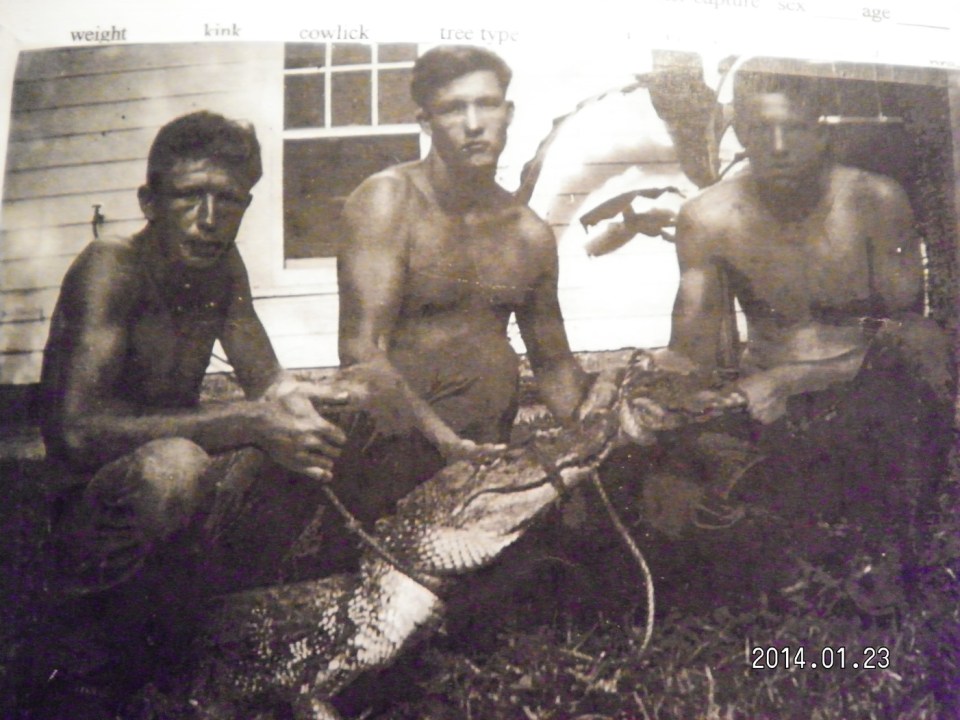
The great alligator caper has long been a tale that has grown out of proportion over the years. At the last Jeff lunch, I promised to sort out some of the facts, myths, and legends. Without major investigation, there would appear to be more than one tale and more than one incident. Roy McBride has been kind enough to send along a recounting of his alligator experience along with a photo, all of which I will list below.

Before getting to Roy’s narrative, however, let me mention a few tales I have heard.

Rumor 1:
I have heard that Rudy Krisch and Wayne Gabehart and David Frazier participated in a theft of an alligator from either the zoo or the reptile pit at the Witte Museum. There are several sub tales that follow, including that David kept the alligator under his house for a while before returning it to its home at the zoo or reptile pit. There are other rumors as well. If anyone wants to write out a narrative and send it along, I will gladly publish it. If laziness prevents writing it out, call me and tell me and I will type it up.

Rumor 2:
It was not an alligator, but several of our classmates broke into the zoo to fish and were nabbed by the police and taken to jail. I did hear that Jim McNeel was driving the getaway car, and it was his lawyer brother who went to the station to secure their release. Jim has promised to flesh that out, but someone bigger than I will need to get on his case to produce.

Rumor 3:
Well, maybe more fact than rumor. Danny Sciaraffa admits to fishing at the zoo and catching some nice ones, but he also confesses that he subsequently found out he was fishing in the spot where the sewage from the hippo pens was released. Like Jim, Danny has promised to write this up, but I stopped holding my breath some months back.

I bet many of you did not know we had a bunch of wild and crazy bunch of classmates among the male population. Here is my offer to you: I will post any tales of escapades that anyone cares to send to me or call to me. Just send to jeff-54@satx.rr.com or call me at 210-492-3773.

Now, here are brief comments from Roy about alligator theft and then his narrative along with a photo of Roy, Richard Cummings, and Bubba Smith.

Jack,

I have no knowledge of anyone that took alligators from the Alligator Gardens. As I’ve already explained, that’s who we gave our gators to because we could not find anyone else that would take them. I’m real skeptical about the story of anyone stealing gators or getting in trouble with the law. Maybe stories like this just get exaggerated through the years. The take home message, from the guys that actually caught the gators, would be that it was a job that required a high degree of physical effort and a small amount of capital investment (picks, shovels, ropes, etc.). While there was a limited opportunity for profit, there was an unlimited opportunity for excitement and adventure.

Regards,

Roy

Subject: Alligators

In the 1950’s South Texas was in the grip of a severe drought. The earth was so dry that deep cracks crisscrossed the surface and if you dropped your knife in one of these cracks you stood a good chance of not getting it back. During this time Richard Cummings, Bubba Smith and I were hunting coons on the Nueces River 10 miles south of Tilden. One morning after daylight while walking back to our truck we saw some unusual looking tracks in the dry riverbed. At this time the Nueces was not flowing and only occasional pools of muddy water served as a reminder that it had once been a river. The tracks we had discovered were unusual in that they were divided by a narrow straight line as if the animal was dragging something. Since we were intimately familiar with all the local animal signs, it didn’t take us long to figure out that the narrow drag mark between the tracks was made by the tip of an alligator tail. We followed this trail until we came to a pool of water, probably 100 feet long and 30 or 40 feet wide. We followed the tracks to where the alligator entered the water and then circled to the far side where we were able to determine, by the absence of its tracks, the alligator hadn’t left. Due to zero visibility in the water we cut off some limbs and made some poles that we could use to probe around in the water. The water was not over waist deep in the deepest part. We waded and poked around but were unable to make contact with the alligator. On one side of the pool was a sloping bank that angled down to the water’s edge. While prodding along one side of the bank I found a tunnel that entered the side of the bank below the water’s surface and went straight back. When I extended my pole further into the tunnel something grabbed it and nearly twisted it from my hand. So now we knew for sure that it was an alligator and we had found its lair. One of us stayed behind to make sure that it didn’t leave, while two of us went to a nearby ranch to borrow some picks and shovels. We spent the rest of the afternoon digging off the side of the bank and throwing the dirt into the water in front of the entrance to the gator’s hole. After a while we had enough dirt in front of the entrance to separate the hole from the larger pool of water. We then bailed out the water into the main pool which resulted in lowering the water level in the gators hole. After a lot of effort, we were rewarded by seeing the very tip of the gators snout. We took a rope, made a noose and poked it over the gators head with our poles until we judged we had the rope around its neck. We tightened the rope and pulled the gator out of its hole into the main pool where we were standing. We quickly made it to the bank with the gator in tow. From there we pulled the gator out of the water. In the following weeks we used the same techniques to locate and capture more alligators now that we knew what to look for and where to find them.

What we hadn’t learned is what to do with them once we had them caught. We heard rumors that women (strange creatures that they are) liked alligator skin purses and men liked alligator boots. But we still didn’t know where the market was on alligator skins. We put the alligators in the back of our truck and took them to the Alligator Garden on Broadway near the Witte Museum. Who would know more about alligators than the owner/manager of the locally famous San Antonio Alligator Garden. We asked if he wanted to buy any alligators. He responded by asking us where we had got them, and when we told him the Nueces River he said, ” there’s not any alligators in the Nueces River”. Our reliance in this man’s expert opinion decreased considerably at that point. We also realized that our new business venture had suffered its first obstacle. We began to search for other things to do with these alligators that nobody wanted. We donated one, free of charge, to the San Antonio Jr. College swimming pool. Eventually we gave the rest of the gators to the man at the Alligator Garden just to get rid of them. We found out soon enough alligators don’t make good pets and you can’t teach ’em nothing. In fact, even with close observation, you can’t tell for sure what they are thinking.

Our buddy, and fellow gator hunter, Richard Cummings was killed in a motorcycle accident within a year. I’m attaching a picture of the three of us with some of the alligators. Left to right: Richard Cummings, Roy

McBride, Bubba Smith.

Roy


Blog 67: In response

In Response to faithful readers…

Thanks to all who commented on the ultimate blog. I will respond to all here on the blog platform, rather than respond individually. As for the happy face, I am just inserting it to see how or if it posts to the website.

First, thank you all for posting your comments. I did not expect to hear all of the kind words and the passion.

My response is tardy, having taken a step back for a day or two. In doing so, I learned a few more things about the blog platform, which has been confusing you and frustrating me.

Each time someone posts a comment, I receive an email. As these arrived with your comments, I read each. The tricky part is that at the bottom of the email is a block that sometimes says “View Comment” and sometimes says “Approve comment;” I overlooked the “approve” on five or six comments; hence you apparently could not see your post, and I received your emails for help.

I don’t comprehend that differentiation between view comment and approve comment. I think that some of you signed on to follow the blog and some did not. Whether that has anything to do with it, I can only speculate.

Another frustration for me is that the format changes from what I submit and how it looks when posted. Sometimes the font or font-size changes, the pictures move around, and the colors of the fonts are not stable. This has caused me to just click the final okay without devoting more time to making corrections.

Thank you for letting me vent a bit in the above paragraph.

Previously, I mentioned that the statistics from the blog indicated to me that readership is low. I have just poked around some more and discovered the following:

Thursday at 9PM is the most popular time to read my postings. The record shows 63 postings, (though I think it is 66). Over the three years since I began posting, there have been 1,021 visitors and 3,324 views. I don’t know how to interpret that, unless they track multiple views by one visitor. I discovered that there are 23 who follow by email, including Era Mae McFarland Scarborough, although she has been silent since our 2014 reunion. The blog most viewed is the one posting the comments from our speaker at the April luncheon. After sending out an email blast indicating the contents of the blog, it was viewed 134 times! Maybe I was wrong in my conclusion that only a few look at the blog.

Moving on

Now that last blog included a back door opportunity, starting with this sentence: “So this is the end of the road for my blog, at least for now.” The “at least for now” left the door ajar. So, I will rethink my position and probably try to post maybe monthly.

Since I am rambling…

Because our esteemed classmate and English professor emeritus, Priscilla Weston Tate, reads these efforts, I do find myself attempting to be a bit more correct and avoid the easy phrases, hoping that I will not be graded on both expression of thought as well as content. I have always enjoyed the nuance of words and in the business world, for documents presented to me for signature, I was a stickler for the document to be grammatically correct and cogent. Alas, I have become lazy and failing to hone the written words.

Favorite words…

Do any of you have a favorite word? If you do, post it here. My favorite is penultimate. For years, I wondered what it meant and finally, about thirty years ago looked it up. It means next to last. Does anyone know the word for next-to-next-to-last (third from last)? That work is ante-penultimate! Some years back, I had just listened to a talk by the San Antonio Symphony conductor at that time. He had used penultimate several times in his talk, and I commented on it after. He is the one who defined ante-penultimate
for me. Ante refers to before, as opposed to anti, or against. Now if you have a favorite work, post it, as long as it is relatively clean. Although this is not a family publication, it is probably best not submit four letter words. Okay, I already know
Bob Blake will offer up a perfectly fine and unique four-letter word.

Beyond that…

I do have thoughts about San Antonio and the changes since our salad days, as well as clips from the newspapers that celebrated the recent 150 years of publication of the San Antonio Express-News, so I will delve into those in the coming weeks.

To close, here is a picture I came across of the committee planning our penultimate reunion held at Oak Hills Country. This was possibly our 50th reunion. Names below the photo.

Left side: Laura More Brusenhan, Louise Dobbins Rawlings, Peggy Frazier Jones, Texas Myers, possibly Jim McNeel. Right side includes Warner Fassnidge, Carol Hanson Keeter, Jack Stutts, Don Martin, and ??. Identity at the end is too dark to see.

Blog 66


Blog 66

The Ultimate Blog, Margaret Pratt, and polio

ultimate

[uhl-tuh-mit] adjective

  1. last; furthest or farthest; ending a process or series:

the ultimate point in a journey; the ultimate style in hats.


So this is the end of the road for my blog, at least for now. The statistics on readership are embarrassing and humbling. With less frequent postings on my part, the number of viewers has dropped. With diminishing numbers of readers, the incentive to continue drops proportionally. Hence, I conclude that I can find more productive uses of my time doing other things. The original intent was to stimulate interest in our 60th reunion in 2014 by recalling memories from the years at Jeff. The hope was to stimulate interest and an exchange of comments between classmates, but that hope did not did not yield much in the way of results. Hence, this is the ultimate blog. Thanks to those who did persevere and who commented from time to time.


This final blog includes an obituary for another classmate, memories of the polio scare in 1946, and a little unfinished business, if you read to the end.

Obituary for Margaret M Pratt

May 26, 1936 – September 16, 2016 
Austin, Texas | Age 80
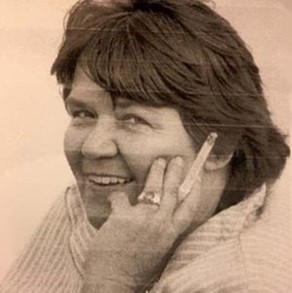
 

Born May 26, 1936 at Baylor Hospital in Dallas, TX. Died September 16, 2016 in Austin, TX.

Margaret graduated from Jefferson High School in San Antonio, TX. She had a Bachelor of Arts from TX State College for Women and a Masters of Science in Math from San Jose State College, San Jose, CA. She was an artist, a writer and a spiritual mentor to many. She also was brilliant in the computer field. Margaret was internationally recognized for her knowledge and insight into the workings of Information Technology.

Margaret was preceded in death by her parents Robert Barton Pratt and Elizabeth Kimball Pratt and her brother Robert Barton Pratt, Jr. She is survived by her sister Elizabeth Pratt Beecroft and brother-in-law Bert E Beecroft, Corpus Christi, TX; her niece Mary Beecroft; nephews Sam Beecroft and Tom Beecroft; and many great-nieces and nephews.

There will be a graveside service on Tuesday, September 20th at 10:30 am at Austin Memorial Park Cemetery.

Margaret was loved by many for her special beauty and grace and will be missed by all.

Unfinished business

In the recent blogs, I have been posting the professions, occupations, and/or careers of our classmates, gleaned from extracting bits and pieces of information gathered over the years. Once again, I had hoped people would comment. Only Mike Gill did.


Inoculations and Polio

The San Antonio District Attorney recently posted a video declaring a direct relationship between the measles vaccine and a cause of autism in children. He quoted medical studies from some years back that have apparently discredited. Farther past, I recall reading that more and more parents are opting out of childhood inoculations prior to the school year. It is worrisome that these options are being exercised by educated parents., for it calls to mind the polio epidemic from 1946 and the great relief when Dr. Jonas Salk discovered a vaccine in 1953. The excerpts which follow are taken from the Express-News files.

Remembering when…In the summer of 1946, all swimming pools in San Antonio were closed and young people were prohibited from attending any public gatherings at churches, schools or theaters. Officials sprayed insecticides throughout the city in an earnest effort to wipe out pests.

The reason?
Polio was sweeping through San Antonio, stoking the public’s fears. It wasn’t the first time the illness had sickened people here, but it was by far the city’s most serious outbreak yet.

Between May and mid-July that year, 85 polio cases were diagnosed in San Antonio and the surrounding areas, and 11 of those patients died, according to a broadcast on local radio station KABC that summer by the city’s health board chairman, Dr. Pat Ireland Nixon.

While tuberculosis would prove to be far more deadly, people were terrified of polio nonetheless because of its potential to kill, paralyze or maim its victims. Nobody knew in those days how polio was spread, but public suspicion focused — incorrectly, as it turned out — on insects such as flies and mosquitoes. Today it is known that polio spreads by person-to-person contact, according to the Centers for Disease Control and Prevention.

Young children were particularly susceptible. And polio cases most often surfaced in May and the summer months.

The illness, first known as infantile paralysis, “was very dangerous, and it was such a mystery,” said medical historian Heather Green Wooten, author of the 2009 book, “The Polio Years in Texas: Battling a Terrifying Unknown.”

“During the height of the epidemic, they would start closing swimming pools and children’s camps, sometimes schools or theaters, all kinds of things,” Wooten said recently. “Anywhere where they thought people would be gathering, they would do that.”

Among the San Antonio children sickened by the virus in 1946 was Linda Brown Fannin. She was only 18 months old when she became sick with polio while attending a family funeral in Oklahoma. Her parents took her back to San Antonio, believing she would get the best care possible at Robert B. Green Hospital’s polio ward. She spent six weeks there, although she doesn’t remember any of it.

“You had to be quarantined,” recalled Fannin, now 70 and still living in San Antonio. “I couldn’t see my parents. Every night, after Daddy got off from work, they’d go and try and see me or be there at the hospital. And there was this one really nice nurse that would bring me out behind the glass so they could see.”

There was no polio vaccine at the time. A breakthrough was still years away. People could only hope that they and their children would not catch the virus — and if they did, that the effects would not be permanent.

The most feared outcome, paralytic polio, would occur if the virus broke through a victim’s digestive tract, entered the bloodstream and attacked the central nervous system, which would cause temporary or permanent paralysis. Others might suffer less-severe symptoms, such as weakness in one limb or mild, temporary symptoms of discomfort. Fannin, for instance, suffered no permanent paralysis, but wore a small brace on her leg from the time she was in first grade until she was in sixth grade.

San Antonio’s first severe polio outbreak occurred in 1942 when the virus sickened more than 75 victims in the Alamo City, according to Wooten’s book. San Antonio’s military bases played a significant role that year in training the U.S. armed forces for World War II. Health officials soon discovered that personnel on San Antonio’s military bases and residents in nearby homes appeared more vulnerable to polio.

“Many victims of the San Antonio epidemic were soldiers and city residents living in or near the local military bases,” Wooten reported in her book. “… In order to properly treat the continual stream of polio patients, an emergency polio ward was quickly established at Brooke General Hospital at Fort Sam Houston.”

That vulnerability was likely related to society’s increasing mobility due to the war, Wooten said.

“Everyone is moving around,” Wooten said. “They’re coming from a lot of rural communities, the small towns, where you might not have had the disease. And so you had much less immunity. And here you are coming to Houston or San Antonio or Dallas or these big military bases or war industries — and you’re mixing it up with a lot of people who are infected even if it’s mild. And then all of the sudden, you’ve got these epidemics.”

The virus continued to sweep across Texas and the rest of the country, resurging in San Antonio with a vengeance in 1946. Nixon, in his writings, partly blamed poor sewer systems in San Antonio, noting that raw sewage backed up into many of the city’s streets during heavy rains. An intensive insecticide spraying campaign got underway, targeting streets, city buses and houses, the San Antonio Evening News reported.

“It was striking somewhere in the state every year — at least somewhere big,” Wooten said. “There was absolutely no rhyme or reason …. And that was what was so terrifying — you never knew from year to year, would your community be next? It just leapfrogged.”

Around this time, local musical performer Red River Dave, whose real name was David McEnery, took to the airwaves of WOAI to perform “The Polio Song” — a tune he had composed.

“Attention, everybody, here’s some things you ought to know,” he sang. “I’ll pass along some good advice on fighting PO-LI-O. Eliminate the housefly and mosquito mighty quick. Remember insects carry that old bug that makes you sick.”

The number of polio cases surged again in San Antonio in 1949, when the city’s health director reported 166 cases and 17 deaths, according to an article published in the San Antonio Express. A final surge swept through San Antonio in 1952, when 152 cases and 11 deaths were reported.

The latter year was particularly bad for Texas and the rest of the country, Wooten noted in her book. “It was just a terrible year nationwide,” she said. “And why — again, no one knows why.”

The March of Dimes spearheaded polio-prevention campaigns that used young polio victims’ images on posters to raise public awareness of the illness. Fannin was chosen as the March of Dimes poster child in 1949 when she was 4. She traveled to the White House and met with President Harry Truman twice.

Truman “was just kind of entertaining us and having a photo opp,” Fannin recalled, noting that she and the president shared a birthday cake when their first meeting occurred on her 4th birthday. “I kicked my boots off when I was sitting with the president. (The media) made a really big deal about that. But I wasn’t probably used to really wearing boots. And they dressed me up like a Texan.”

Fannin also met with U.S. Speaker of the House and fellow Texan Sam Rayburn that year. An iconic photo — for which Fannin perched on Rayburn’s desk, wearing her boots — captured the meeting for posterity.

The first hope of eradicating polio arrived on the market in 1955 when Dr. Jonas Salk introduced the first polio vaccine. The injection was made available after undergoing field trials in multiple cities, including San Antonio.

After the Salk vaccine was distributed, the number of polio cases in San Antonio plummeted quickly. In 1956, a total of 96 polio cases and four deaths were reported. By 1957, those figures declined to a 10-year low with 42 polio cases and two deaths reported, according to the San Antonio Express.

Dr. Albert Sabin followed up with the first oral vaccine for polio in 1962.

Thanks to the San Antonio Express-News.


Gerry Guly Gabehart and Ruby Jane Rhodes

Blog 65

An Author at Eighty!

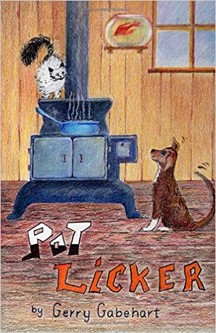
It is never too late and one is never too old to do amazing things: Witness our classmate Gerry Guly, who married Wayne Gabehart, also a classmate. Gerry is an accomplished artist and just recently published her first book.

Gerry says she woke up one morning and the story for her book was in her head. So she fired up the computer, started to write, and out came a children’s book. Not only did she write the book, but she illustrated it as well. Pot Licker
is a heartwarming story about a rescue dog and how he changes some lives. The book is available on Amazon at https://www.amazon.com/Pot-Licker-Color-Illustration-Version/dp/1534683658 

Gerry found the writing process so exciting that she already has the next book in the works. It will be a reading and coloring book.

Now a few words about Gerry’s art. Her medium is oil and she paints what she likes. In addition to mountains, oceans, and people, Gerry also does some religious themes. These paintings she donated to churches. She has oils hanging in Belgium, England, and France.

Lest we overlook Wayne, Wayne has an ear for music and a talent for sitting down at a piano. Gerry says he can play the accordion (but it is horrible she says) and the harmonica somewhat better. I wonder if he plays Lady of Spain on the accordion? That is what most people know.

For those of you who did not get the class history book a couple of years ago, below is what Gerry and Wayne submitted.

60 years! Where has the time gone? We were so blessed to have grown up in the years we shared at dear old Jeff and for some of us the early years at Mann and Woodlawn Elementary. Wayne still talks about riding his horse to elementary school. Wayne and I met the first day at Jeff in Miss Perez’ advisory. He borrowed my pencil. Come to think of it, I don’t believe he ever returned it.

We have been blessed with 58 years of marriage, 59 in August. We have three handsome, wonderful boys, three granddaughters and of course, two sweet daughters-in law.

After working 33 years for Exxon, Wayne retired. I worked for Round Rock ISD for fourteen years and retired. We moved to the small town of Natalia on my parent’s small vegetable farm, where we live now.

As I am sure some of you remember, Wayne played the piano at school. That talent was a blessing for him as it has brought many wonderful people ito our lives through music. He played with a western band for a few years along with playing at nursing homes on a monthly basis. Now he just plays once in a while just to keep in practice.

Moving to Natalia after retirement I became more interested in oil painting. I paint whatever I like and can’t say I prefer one subject over another. I have paintings in Europe, several states, and numerous churches.

We look forward to seeing our classmates and hope it won’t be for the last time for any of us.

God bless all of you and may our beautiful school be around for many, many years.

Another Classmate Passes

RUBY JANE RHODES ROBINSON

December 18, 1935 – September 6, 2016

Beloved Wife, Mother and Grandmother, Ruby Jane Rhodes Robinson, age 80, passed away peacefully at her home surrounded by her family on Tuesday, September 6, 2016. She was a 1954 graduate of Jefferson High School and a member of the famed “Lariat” Pep Squad.

A lady of sheer elegance and grace, she began her employment with the old Joske’s and Frost Brothers Department stores. Ruby’s modeling and teaching career began at the Ben Show Modeling Studio, her specialty was modeling hats. After a short courtship, in January 1958, she married 2nd Lt. Earl Joe Robinson from Goodlettsville, TN and Baylor University.

She was a member of the San Antonio Genealogical and Historical Society, the River Art Group and a proud member of the Daughters of the Texas Revolution. She and sister, Bonnie Mae were active in the Starving Artist Shows sponsored by the Little Church of La Villita.

Ruby is preceded in death by her parents, James Elton and Antonette Rittimann Rhodes; an infant brother, James (Jackie) Earnest Rhodes and sister, Bonnie Mae Rhodes Luddeke. She is survived by her loving husband, Earl Joe Robinson; sons: Carlton Rhodes Robinson, Jonathan Russell Robinson and Jeffrey Miles Robinson; and granddaughter, Kathryn Keely Robinson.

Services are pending.

Who did what….a continuation of what we all did after Jeff days.

Actors:

Meredith Kelly (Florence Boston)    Gus Peters

Nancy Grauer                Robert Jolly

Artists:

Beth Wilcox

Ann Hinnant

Bill Robinson

Musician:

Jon Kay (Bubba) Littrell        Mary Ann Lothringer

Law Enforcement

John Patmore        Paul Skrobanek        Carl Conn


Birthdays, Cars, and Air Conditioning

Blog 61

An aside:  When I post these blogs, I never know what changes will occur in format and in when it is published.  For example, the black bar across the top under the air conditioning banner appeared on its own and I have not determined how to delete it.  So you enjoy while I remain perplexed.

Who Did What…more

Our class had a lot of health care professionals. Here are the ones we know about for sure:

Doctors:

Dick Brusenhan        C.E. Chapman        Barney Cline        Jack Davis

Robert Huff         Joel Glicksman        Louis Holst        Billy Peche

 Bob Tate        Guy Bragg         Joy Robertson        Carlos Rocha

Dick Blount        David Pitkethly

Dentists:

Larry Byrd        Munson Fuller        Darrell Hawkins

Pharmacists:

Charles Griffin        Margare Riebe        Larry Byrd

Nurses:

Peggy Page        Carolyn Pope        Jane Rupe        Joy Weir

Lora Fay Foster     Ruth Jaurequi        Claudia Neuerberg

Medical Technology:

Stella Muniz    Jeanine Kliefoth

Veterinarian:

Ed Piggott


What life was like in San Antonio, before air conditioning?

The Alamo City has been at the forefront on air conditioning innovation since the early 1900s

  • Not surprisingly to anyone who has lived through a San Antonio summer, the Alamo City has a number of historic firsts when it comes to innovations in air conditioning:

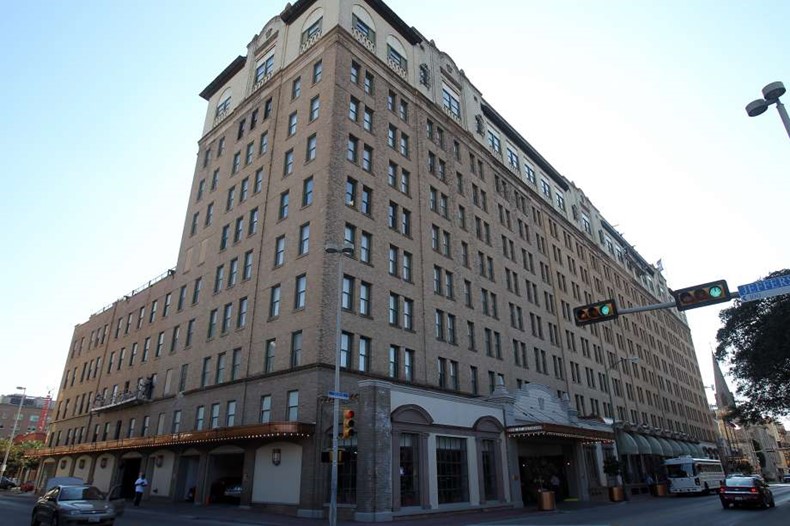
    The St. Anthony Hotel at 300 E. Travis St., which opened in 1909, was the first hotel in the world with fully functioning air conditioning, according to its website.


    Photo: Jennifer Whitney, Express-News

    The St. Anthony Hotel at 300 E. Travis St.

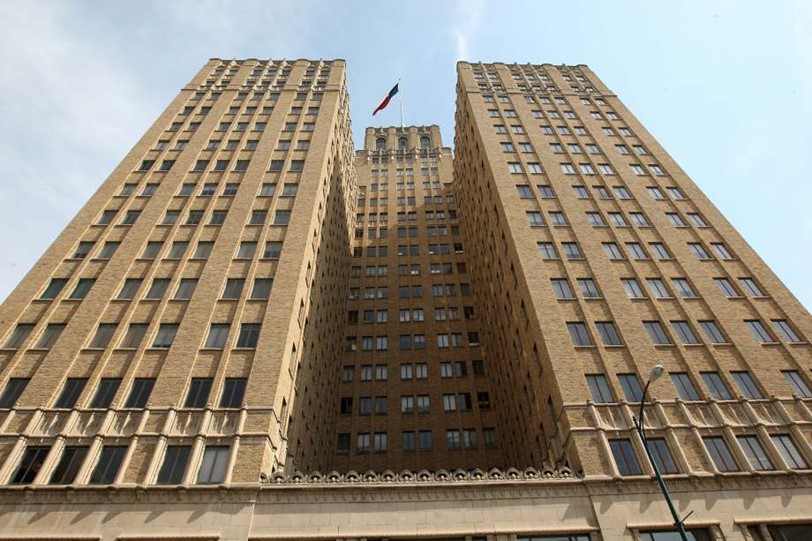
    The nearby Milam Building, at 115 E. Travis St., was the first air-conditioned high-rise office building in the U.S. when it was built in 1928.


    Photo: JERRY LARA

    The Milam Building at 115 E. Travis St.

    When the Majestic Theatre opened the next year in 1929, it was the first theater in Texas to have air conditioning. In fact, it was San Antonio’s first air-conditioned place that was open to the public, according to its registration form for the National Register of Historic Places.


    Photo: UTSA Special Collections

    The Majestic Theater is shown in 1954.

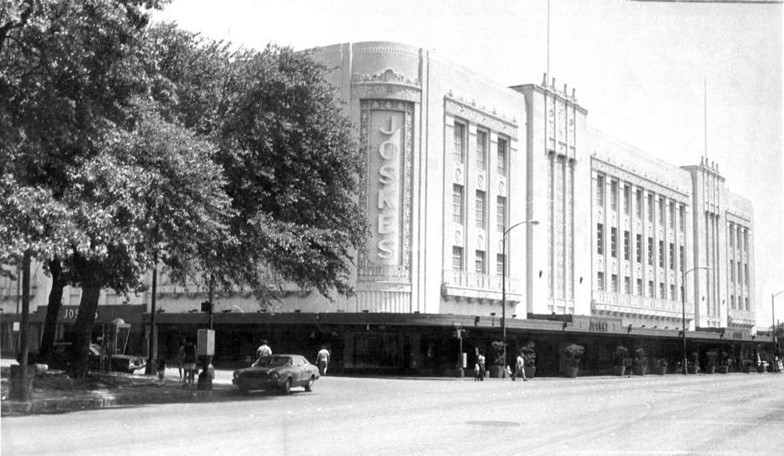
    In 1936, department store Joske’s became the first fully air-conditioned store in Texas. It was such a big deal that they featured it in advertisements.


    Photo: Express-News

    In 1936, department store Joske’s became the first fully air-conditioned store in Texas. Photo circa 1970.

    Happy Birthday and New Cars—Idle thoughts

    Happy Birthday to Julia Sawalha, Eric Stonenstreet, Zoe Kazan, and Constance Marie. Who are they? They are actors. But who cares? Not I. A while back I started glancing at the daily listing of birthdays of noted people. And it caused me recall days of youth; I could not understand why my parents did not have a clue about who were the current stars of movies and music. Nor could they recognize all the changes in the newest model cars. My friends and I could note any make, model, and year of any car. My parents just did not care. Now I understand! It is not important. All cars are computer designed and look vaguely alike. Were it not for the logo emblems, I probably could not recognize a Hyundai from a Nissan from an Infiniti or from a Mercedes. I still know a Cadillac when I see one, and a Porsche. But in fact, I really don’t care much who is on the Silver Screen or what featureless car is driving by. There are exceptions, of course. Driving down the freeway the other day, I saw the logo and wondered, because if looked like the Lamborghini emblem, so I pulled closer alongside, and, to my surprise, yes! It was! But it was a mundane looking four-door sedan, looking otherwise like all the other cars.

    By the way…who or what did you girls identify with as the latest and greatest? Probably who was in all the movie magazines, right?

Joel Hoechstetter, WOAI, and Hooters Blog 60

Joel Hoechstetter, WOAI, & Hooters

Blog 60

 Below is Joel’s obituary. Thanks to Carolyn Taylor and Ed Davis for sending along to me. Back in school, I knew who Joel was but did not know him. From the comments that some have sent, Joel was well liked. I do remember his attending recent reunions with his wife, Sandra. For the first several events, he attended with a really pretty, younger woman, Sandra, whom he did marry. Joel did not come to the last reunion. If any of you want to add comments about Joel, you can post it on here for others to read. Look for the button to add a comment.

Joel Hoechstetter

Joel Hoch 0021936 – 2016
 Joel Hoechstetter
1936-2016
On Friday, August 5, 2016 Joel Hoechstetter ended his seven month battle with illness. Born in San Antonio Texas on September 4, 1936 to Alexander and Ruth Hoechstetter, Joel moved to Houston after attending the University of Texas. The consummate people person and salesman, Joel started his career in the fashion industry with Foleys and Sakowitz. Later, Joel moved to the insurance business working for American General before venturing out on his own to start The Hoechstetter Company; a successful insurance company that he ran for the remainder of his career.
Joel’s greatest love was his family. He lived with his wife Sandra and their dogs Lilly Rose and Winston. Joel and Sandra shared a life filled with love together traveling across the country, antique shopping and eating at an eclectic variety of restaurants. Joel was a great father and was extremely proud of his son Andrew. Throughout Andrew’s life Joel was always eager to be involved as a wonderful role model, mentor and unwavering supporter. Joel also loved his daughter-in-law Amy as though she was truly his own daughter. Their relationship grew and grew over the years and he really loved having Amy in his and Andrew’s life. Without question, the greatest part of his life was when Joel became Pappo, with the addition of Rachel and Jessica, his beloved granddaughters. Pappo loved Rachel and Jessica with all his heart and took tremendous pleasure in spending time together laughing, playing and teaching his own special version of life’s lessons.
Joel is also survived by his former wife Cissy Hoechstetter; step-children Rob Cauthen, Macon Cauthen and Elizabeth Baird; step-children-in-law Elvira Cauthen, Helen Cauthen and Michael Baird; step-grandchildren Jack, Dylan, Reese, Isabella, Rylan and Collins.
Funeral service will be held at 3:00pm, Wednesday, August 10, 2016, Beth Israel Memorial Gardens, 1101 Antoine, Houston.
Joel will truly be missed by so many who loved him so much.

Published in Houston Chronicle on Aug. 8, 2016

WOAI and Hooters

Do any of you remember the old WOAI transmitter building on the old Austin Highway enroute to Austin? It stood off to the right in the town of Selma, which then was about half-way up the road to New Braunfels. That was the country then and long before Selma became nationally known as a speed trap. Selma is now a more respected suburb contiguous to San Antonio, with the speed trap reputation long gone.

WOAI eventually vacated the building. For a good many years, the building housed the Selma city offices downstairs and the local jail upstairs. As Selma developed a significant tax base, city offices moved to a new building and the building was vacant once more. A few years ago, Hooters took it over and is now in the process of expanding the building and adding a patio. No, I do not frequent Hooters, but I do drive by somewhat regularly to and from Costco, and today I noticed the construction. Nothing significant here—just a bit of old time history.

Who Did What,
continued

Our unscientific list of who did what after we grew up has covered engineers and professors. Here are several short lists that are easy to type. If you all know of others, preferably add it as a comment here or else send me the information.

CPAs

Sam Bell    Bruce Cassell    Betty Ann Canfield    Sheldon Oster

Law Enforcement

Carl Conn        John Patmore        Paul Skrobanek

Actors

Nancy Grauer    Meredith Kelly (aka Florence Boston)     Gus Peters

Robert Jolly

Closing out today,
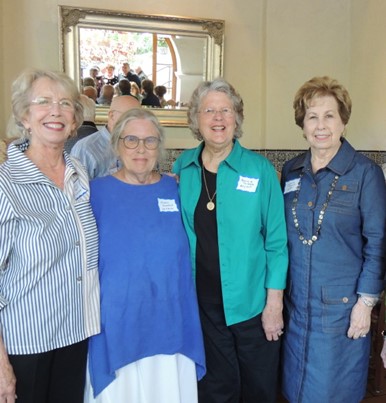
here is a photo from the April lunch—Patricia Padgett Wiseman, Susan Crawford LeVieus, Patricia Trimble Bryant, and Connie Mayes Dyer.


Absolutely shocked!

Blog 59

Absolutely shocked!

Who Did What, Part 2

Last time I started a listing of who did what after graduation. These listings are not all inclusive—just a bit of effort by Charlie Griffin, perusing past notes sent in, and the memory which still kicks in from time to time. The first list included those who became engineers.

Today, let’s call out the academicians at the secondary level:

Rudy Alvarez    Don Mills    Priscilla Weston        Jim Bob Miller        Esther Whitt

Ben Williams    Nancy Grauer    Bob McMinn        Herff (Buddy) Moore    Rose Marie Juarez

Do any or you know of someone else at the professorial level not included above?

All of the above earned a PhD, as I know others in our class have done. It would be nice to know the fields of study for these folks. Does anyone wish to explore this subject further?

What a shock!

Reading the morning newspaper, I came across a brief that an elderly man in the Northwest part of the city had shot and killed a would-be intruder to his home. The article then described the “elderly” man as in his late 70’s. What a shock to the system. Who defines elderly? Am I elderly? Are any of you elderly? Elderly is a state of mind, in my elderly opinion. Most of the classmates that I am in touch with are vibrant, alert, and energetic. It is true that I know of a couple of our classmate brothers/sisters who are indeed elderly, primarily from attitude. Some of us are less fortunate with health issues, but that also does not define elderly in my book. If any of you reading this identify yourself as elderly, please let me know, privately or as a comment. Meanwhile, I will stick with the label senior and allow younger men and women to open doors for me. That is because they see my white hair and insist that I go first.

Nostalgia: When TV Came to San Antonio

The hundreds of TV channels and vast programming choices San Antonio viewers have at their fingertips now is a far cry from what greeted locals in late 1949.

When the Alamo City’s first local television station, WOAI, signed on more than 65 years ago, the audience saw a rerun of a college football game and a documentary about the construction of its building at St. Mary’s and Navarro.

Both offerings may seem like yawns by today’s standards, but television back then, a shiny city newcomer, was thrilling in any form. In fact, the S.A. mayor at the time proclaimed Dec. 11, 1949, as “T-Day.”

The San Antonio Express-News heralded the arrival in that morning’s paper, describing “T” as “a lusty-voiced, bright-eyed youngster, who arrives in town Sunday afternoon, promising much in the way of added entertainment for South Texans within sight and sound of his capricious capers.”

As relatively few people owned a set, “appliance stores held open houses,” said WOAI’s chief anchorman Randy Beamer, who has been with the station 25 years and has done much research into its history.

In a 1999 Express-News interview, one of WOAI’s first newsmen, Henry Guerra, also recalled that many locals gathered outside the old Joske’s of Texas to watch the television in the display window.

As for the programming delivered on Channel 4 during those first hours, most were taped shows, including highlights from the SMU-Notre Dame game that was played the week before; a children’s program called “Johnny’s Treehouse,” 15 minutes of local news featuring the city’s first anchorman Austin Williams; and a Broadway variety program.

The first local entertainment show — “Curtain Time” — wasn’t broadcast until 7 p.m.and featured dancing and singing.

“Another early program was ‘Dance Time,’ featuring Bud and Marie Nash (local dance instructors), with music by Mel Winters and the Orchestra,” Beamer shared from a 40th anniversary special that aired on his station in 1989.

An early singing guest was one of San Antonio’s vocal institutions, Rosita Fernandez. “She was just Rosita in the introduction and sang in Spanish,” Beamer said.

Eventually, Western flavor was added with a singing cowboy: Red River Dave McEnery, known for his topical lyrics. In a 1989 interview with former Channel 4 anchor Debora Daniels, Dave waxed nostalgically about the lack of station security back then. There were “no locks on the doors,” he recalled. “People could wander in and out. I’d see some of my friends — they’d be waving at me.”

Now, WOAI is the city’s NBC affiliate. But initially, WOAI ran programming from several sources: NBC, ABC, CBS and the now-defunct DuMont Network. That was short-lived, however, after other S.A. stations claimed their own network affiliations.

Few S.A. TV shows that weren’t news-related were success stories. One early hit, however, was “Swingtime,” a teen dance gig a la “American Bandstand” that debuted on Channel 12 in 1964. After a few years, it jumped to WOAI and featured one of the city’s hottest DJs of the ’60s and ’70s, Bruce Hathaway.

(Bruce is still around doing gigs) A couple of decades later, the station debuted the city’s first locally produced morning lifestyle show: “San Antonio Living,” originally hosted by Tanji Patton and still going strong. During the ensuing 17 years, other local affiliates launched similar programs.

The biggest boon to S.A. television, then and currently, is the local TV news. It had a very modest start here, however.

WOAI’s first 10 p.m. broadcast was a no-frills production that consisted of prominent WOAI radio voice Guerra reading the news in his trademark deep baritone voice in front of a television camera. He was the first Mexican-American on a San Antonio newscast and the only one for several years. His trademark sign-off became, “Good night, muy buenas noches.”

“The anchorman did everything in those days, ” Guerra said a couple of years before his death in 2001. “We did the international news, the sports, the business news. We also did local news, which we essentially stole out of the paper. Of course, we didn’t let on that that’s what we did.”

News visuals were a far cry from the impressive HD video of today. “At first, our pictures consisted of photos clipped out of the paper that we’d attach to a music stand, ” Guerra said, recalling that commercials also were filmed live in the studio.

Another first for WOAI-TV was gender related. “The first woman anchor was on our station,” recalled WOAI general manager John Seabers. Her name was Martha Buchanan.

She started on a Channel 4 panel program in 1965 called “Early Evening Report,” which aired from 4:30 to 5:30 p.m., but it wasn’t until ’72 that she broke ground state-wide. That’s when WOAI launched its weekday 6 p.m. broadcast and introduced Buchanan as its co-anchor, making her the first woman to head a prime-time news telecast. “Jessica Savitch was anchoring in Houston. . .but she was doing weekends, ” recalled Buchanan in a 1999 interview. Buchanan also paved the way for pregnant anchors; she stayed on-air, “in all my blooming glory,” until two weeks before giving birth.

Today, female anchors are an S.A. staple with he-she tandems on just about every local news program.

The number of daily newscasts also has grown dramatically; WOAI currently airs nine half hours Monday through Friday.

Technology has changed markedly, as well. During the early days, for example, news content was typed on paper and carbon copies were distributed. “Stories were longer because film had to be developed and edited,” recalled WOAI’s chief engineer Tom Strauch, a vet of the station for more than three decades. “It was very difficult to move things around, so the news didn’t feel as spontaneous.”

Once typewriters and film were traded for computers and video, stories could be switched around “on the fly,” he said.

WOAI’s many ownership changes over the years also triggered change. Originally owned by Southland Industries, the station was sold numerous times over its six decades. After it was acquired by United Television in 1974, WOAI announced that it would change its call letters in conjunction with its 25th anniversary.

It became KMOL and stayed that way until 2002. Clear Channel Communications, already the owner of WOAI radio, acquired the TV station and changed the call letters back to the original WOAI to strengthen the bond between the two broadcasting entities.

Clear Channel eventually sold its TV unit. Under WOAI’s current ownership, however, it touts a similar synergy with a sister station. When Sinclair Broadcast Group, which already owned Fox affiliate KABB, purchased WOAI-TV, the eventual result was a marriage of news and other resources under one roof.

In late 2014, WOAI left its original downtown location and moved to KABB’s home at Loop 410 and Babcock, where both stations share a giant newsroom, pooling reporting and video for their separate shows.

One thing remains constant, however: San Antonio’s love of news personalities. From Jim Dawson’s weather-related cartoons in the 1960s and ’70s to the big to-do over the shaving of Beamer’s trademark mustache in 1997 to relatively recent promo spots featuring WOAI’s anchors imitating telenovelas, on-air fun combined with serious news continues to rivet local audiences.


WHO DID WHAT, BUT NOT TO WHOM!

Blog 58

Explanatory comment:   Text is more readable when it is visually appealing.  Unfortunately, a good bit of the layout gets lost when translated from what I attempt to what gets published, and I have only a vague idea of how the blog might look compared to what I had in mind.  What appears will be a surprise to all of us.
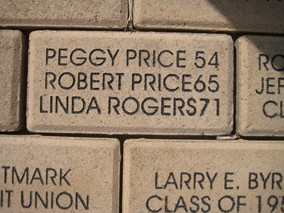
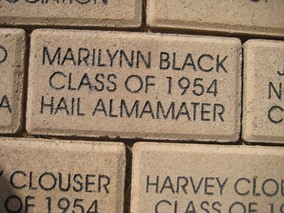
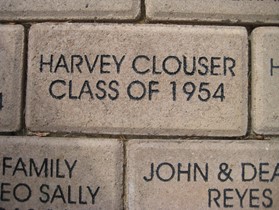
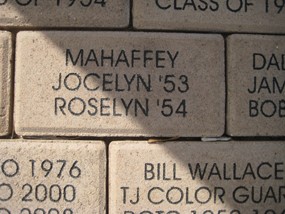
Bricks, first
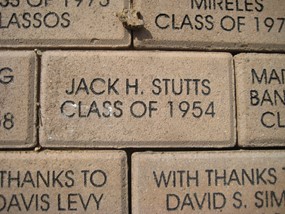
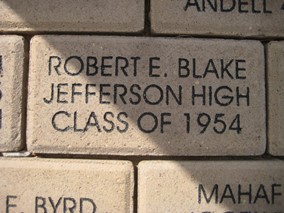
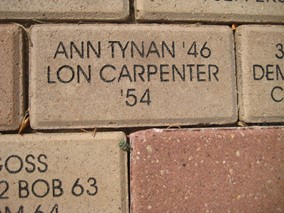
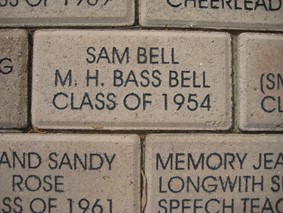
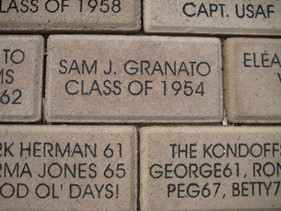
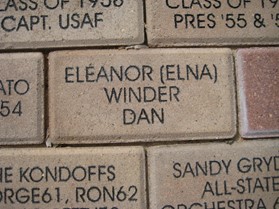
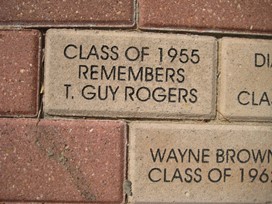
Below are the bricks sponsored by our class members. In addition, we saw bricks honoring T. Guy, the Lassos, teacher Jean Longwith and librarian, Alice Lovelace, and various others. About 250 bricks are waiting to be put in place at the base of the flagpole, but the contractor has stipulated 300 are required at a time. If you have not thought of giving a brick in honor of yourself or someone else, it is for a good cause. I was ashamed to see a brick with my deceased brother’s name on it—ashamed because it was donated by a friend and not by me. I just did not think of it.
Here goes:


Who did what, but not to whom

One thing your committee, our class, and I never accomplished, although I thought about it from time to time, was to take a census of what people did for their career. Charlie Griffins started a list after our last reunion. He reviewed all the class notes at our disposal, compiled after various reunions.

One of our discoveries is that many of us had a career, a second career, in some cases, a third career, and an avocation that approached career status.

Sadly, we will never know what many of our classmates did for gainful employment, mostly because they are dead, lost, or because we never asked. What we do know, I will publish here over a couple of weeks.

My sense is that the most common vocation was in the field of education and business. We supplied a generous number of doctors and engineers but not so many lawyers. In fact, we ought to all be impressed by the educational accomplishments of our class, leading to professions and academia.

From our unscientific collection of information, here are the first few listings. If you see omissions, please add a comment.

Engineers is alphabetical, sort of:

Elliot Bilhartz    Harvey Clouser    Joe Coreth        Jay Crawford    Ed Davis         Mike Gill        Frank Hagan    Wayne Lybecker

Bill Solcher        Alex Trevino    Doug Campbell    Jerry Harris        Jaime Ornelas    Rock Mogas        Skipper Quick    Jerry Stephens

Jay Wiedenfeld

Whom did we miss?

Blog 57 TOO MUCH SKIN

Blog 57

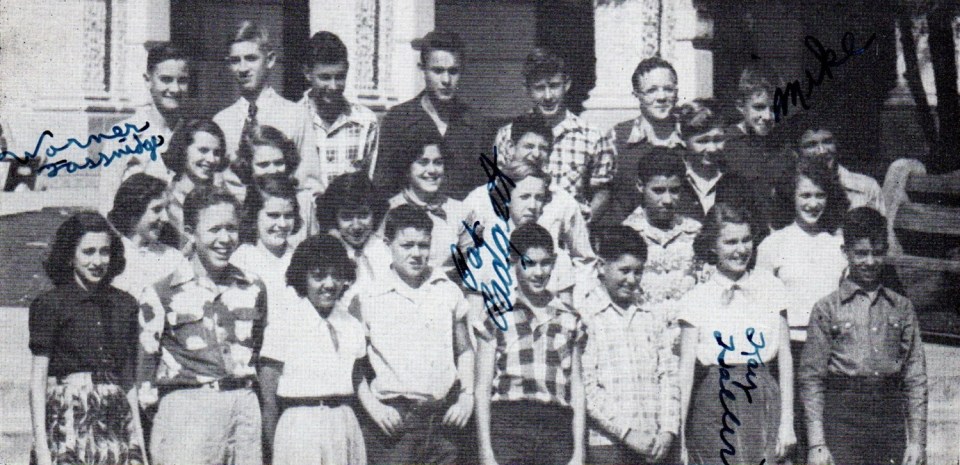
The Freshman Class of 1954 mid-termers

Pictured below are the freshman who arrived at Jeff in January, 1951. The yearbook lists us as the class of 1955; however, some of us finished in 1954, some in 1955, and a few were not heard from again. You will have to overlook the scribbling, but when we all signed yearbooks, many wrote right across their face.

Front row: Rose Marie Zatarain; Margaret Adams; Anna Sue ridings; Wendell Wong; Shirley Auer, Jack Stutts; Ben Villerreal

Second Row: Elizabeth White; Cecilia Abdo; David Fretz; Ray Kuhl; Anita Smith; Edmond Schleyer

Third row: Carolyn Hill; Leonard Chapman; Frances Folkes; Carol Hansen; Gordon Brown; Ben Ross

Front row: Antoinette Rizzo; Byron Fonarow; Adelaide Rodriguez; Leon Knight; Billy Vaughn; Jimmie Meek; Kay Haller; Gene Muenzler

Second row: Mary Dell Gill; Mary Ezell; Ida Garcia; Patricia Padgett; John Nieto; Jeanine Kliefoth

Third row: Barbara Ezell; ann Keller; Ruth Freedman; George Lowrey; James Harris; Arthur Morin

Fourth row: Warner Fassnidge; Joe Coreth; Carl Dienger; Charles Thias; Charlie Conaway; Richard Funk; Michael Stallings

These two photos are the last of the 1954 mid-termers, sophomores in the past two blogs and freshman In this blog.

What’s Next?

I have been disposing of a full file cabinet drawer of Jefferson stuff collected over the years while chairing the various reunions. I will present some of that, to include notable happenings in 1954, mostly compiled by Kay Matteson Gregory; some of the class notes sent in by you people; some Jefferson history; and some events in and around San Antonio over the past 50 years; and photos.

Too much skin!

How many times do we joke about our social calendar being filled with dates at our doctors? There is always that process of checking-in: weighing and blood pressure, oxygen, temperature, etc. I don’t mind the weighing in, because I know their scales lie, compared to mine at home, where I step on daily unclothed. But what really bothers me is when they measure my height. In my prime, I was five feet, nine and a half inches. Now, if I stretch as much as I can, they say, “five feet seven.”

I have become the incredible shrinking man! The other day I was looking in the mirror trying to get past what I think I look like and recognizing the real me. My thought was, I have too much skin. Maybe my height decreased by 2 ½ inches but the skin stayed with me! I can think of no other explanation for the skin that is hanging around.

I fell comforted by knowing that some of you recognize the same predicament.

Tune in next time.